The Myth of Co-Living
Promises vs Reality
What Co-Living Is Supposed To Be (According to Policy)
Large-scale purpose-built shared living (LSPBSL), often marketed as co-living, is officially defined by the Greater London Authority under the London Plan as:👉 A housing model designed for community, flexibility, and modern urban living
Key features include:
At least 50+ private rooms
Large communal spaces (kitchens, lounges, work areas)
Designed for single-person households
Minimum stay of 3 months
Positioned as a transitional housing option
In theory, co-living is meant to:
Reduce loneliness
Offer flexibility
Provide high-quality shared amenities
Offset smaller private rooms with meaningful communal living
Buried in the official guidance is this:
❗ “It does not meet minimum housing standards and is not considered suitable for long-term living.”
Let that sink in. This isn’t an accident. It’s written into policy.
You'll often see co-living marketing phrases such as:
“Vibrant community”
“All-inclusive lifestyle”
“Effortless living”
“Built for connection”
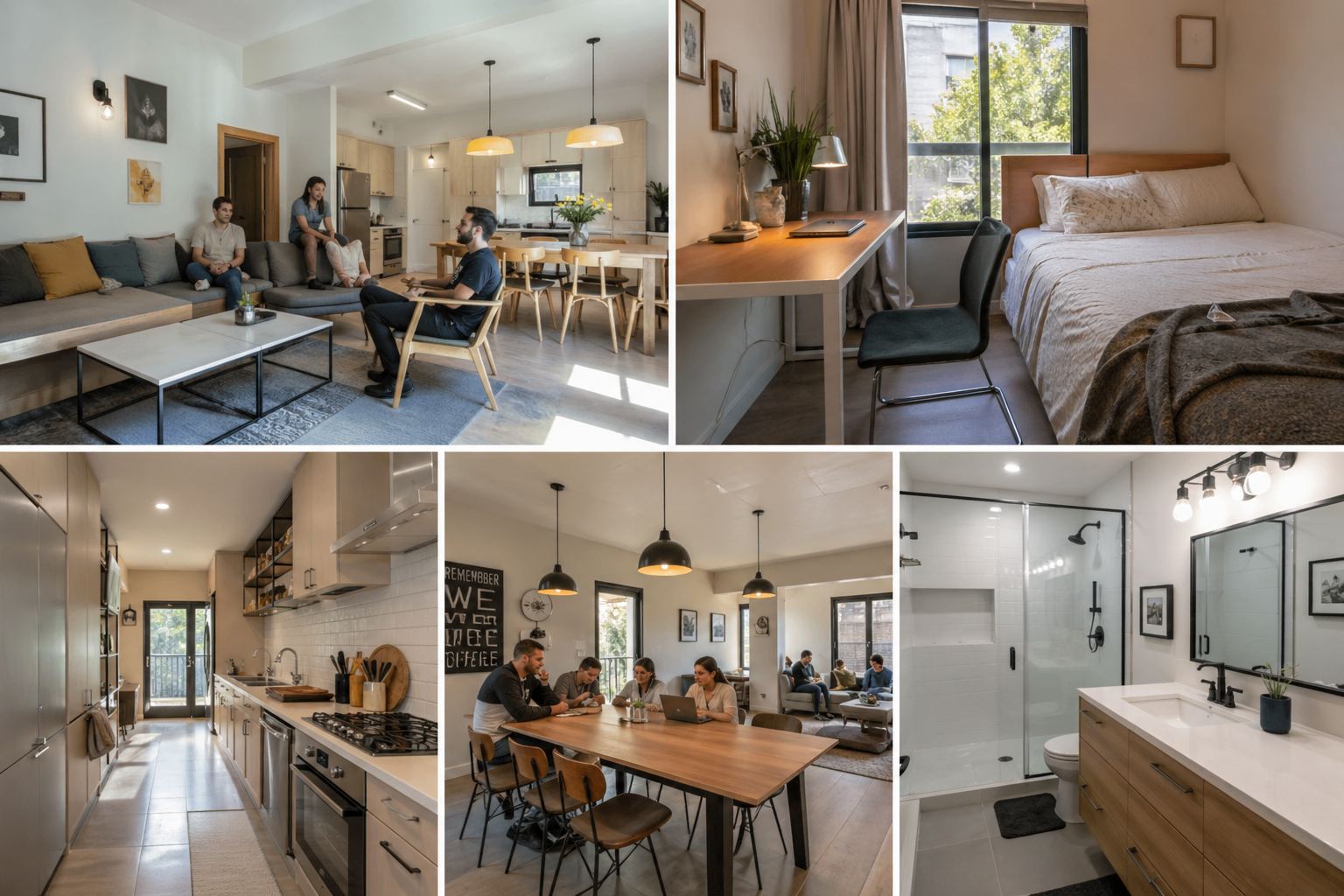



Co-Living Marketing — Decoded
“Vibrant community”
Often means:
A large number of people in one building
No guarantee of real interaction
Social events that few attend after the first week
Behind the listing:
Proximity doesn’t equal connection.
“All-inclusive lifestyle”
Often means:
Bills bundled into a higher monthly rent
Limited control over usage (heating, laundry, shared facilities)
Paying for amenities you may rarely use
Behind the listing:
You’re not saving — it’s just pre-packaged spending.
“Effortless living”
Often means:
Minimal responsibility… but also minimal control
Standardised, one-size-fits-all living conditions
Issues handled slowly — because you’re one of many
Behind the listing:
Convenience for them, not always for you.
