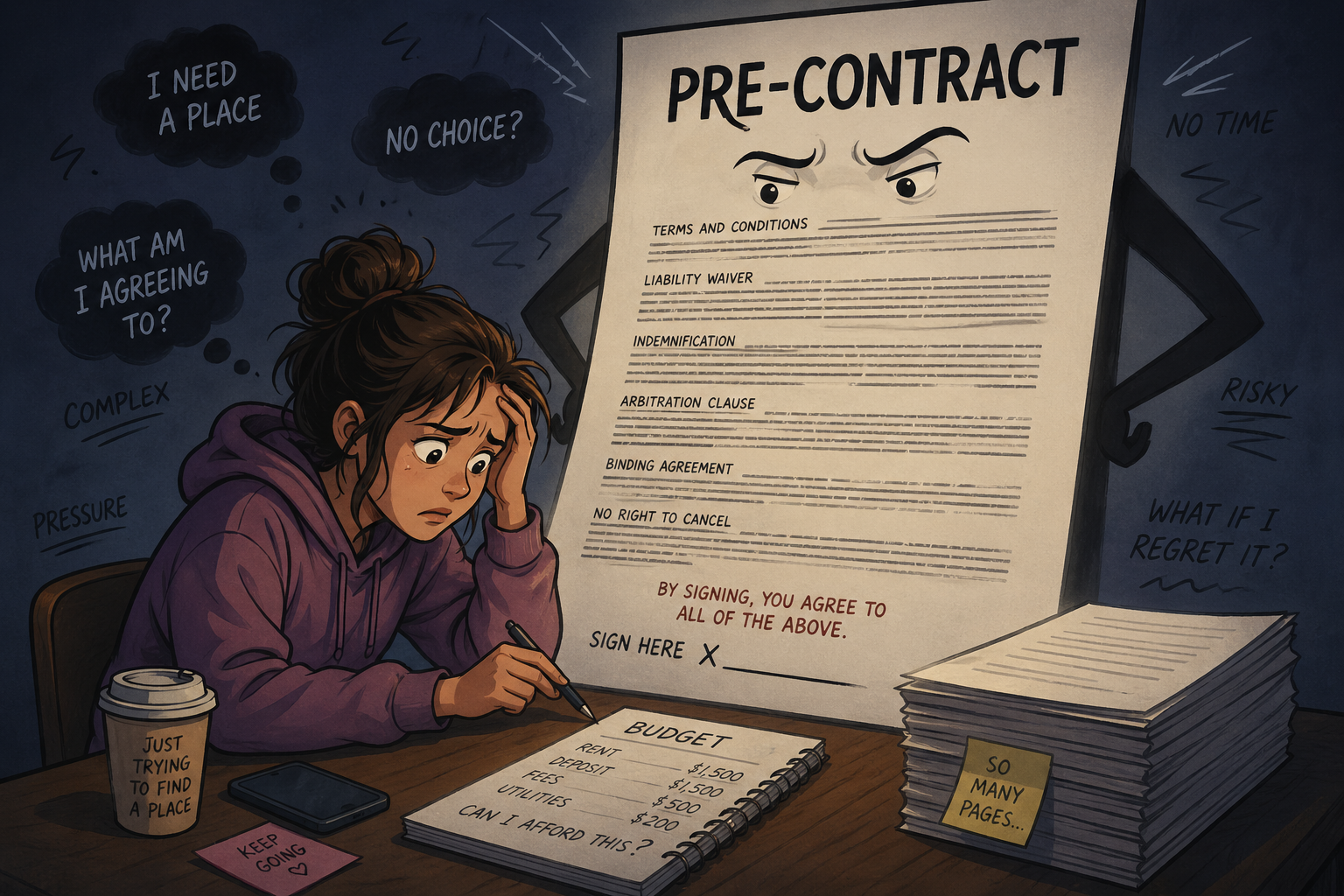
Ruthless Methods We’ve Observed Again
The Form Before the Contract: How Pressure Starts Early in the Rental Market
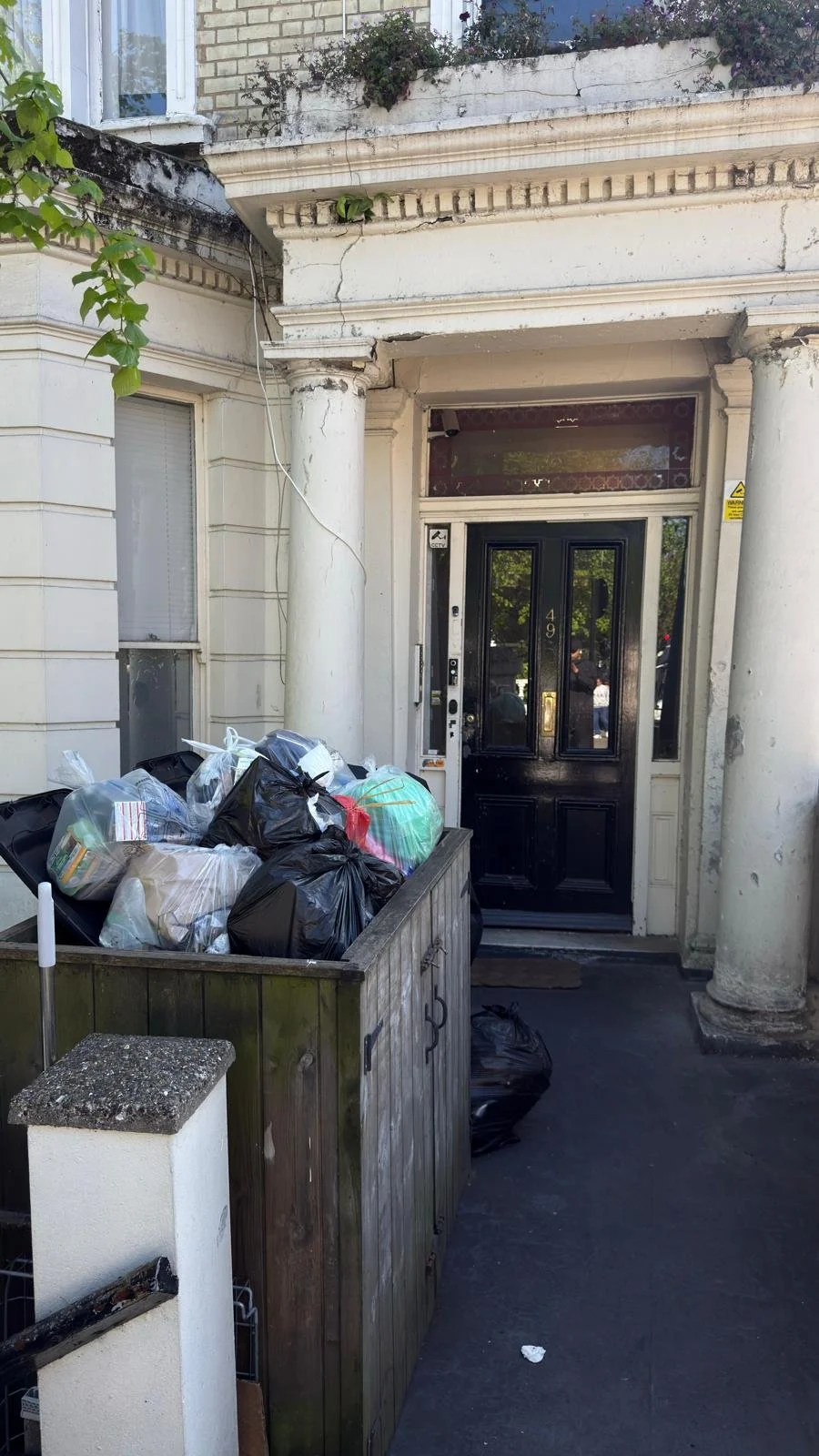
Never Judge A Book By Its Cover!
Although the outside looks rather run down, the interior was promising albeit small.
“From the interior video, the property appeared clean and reasonably well presented. It would likely feel better offered unfurnished, but it does include an en-suite shower room — positioned directly opposite the bed in what is essentially a very compact bedsit. Space is extremely limited, with only enough room to turn around comfortably. That said, considering the location, the asking price is not unreasonable.”
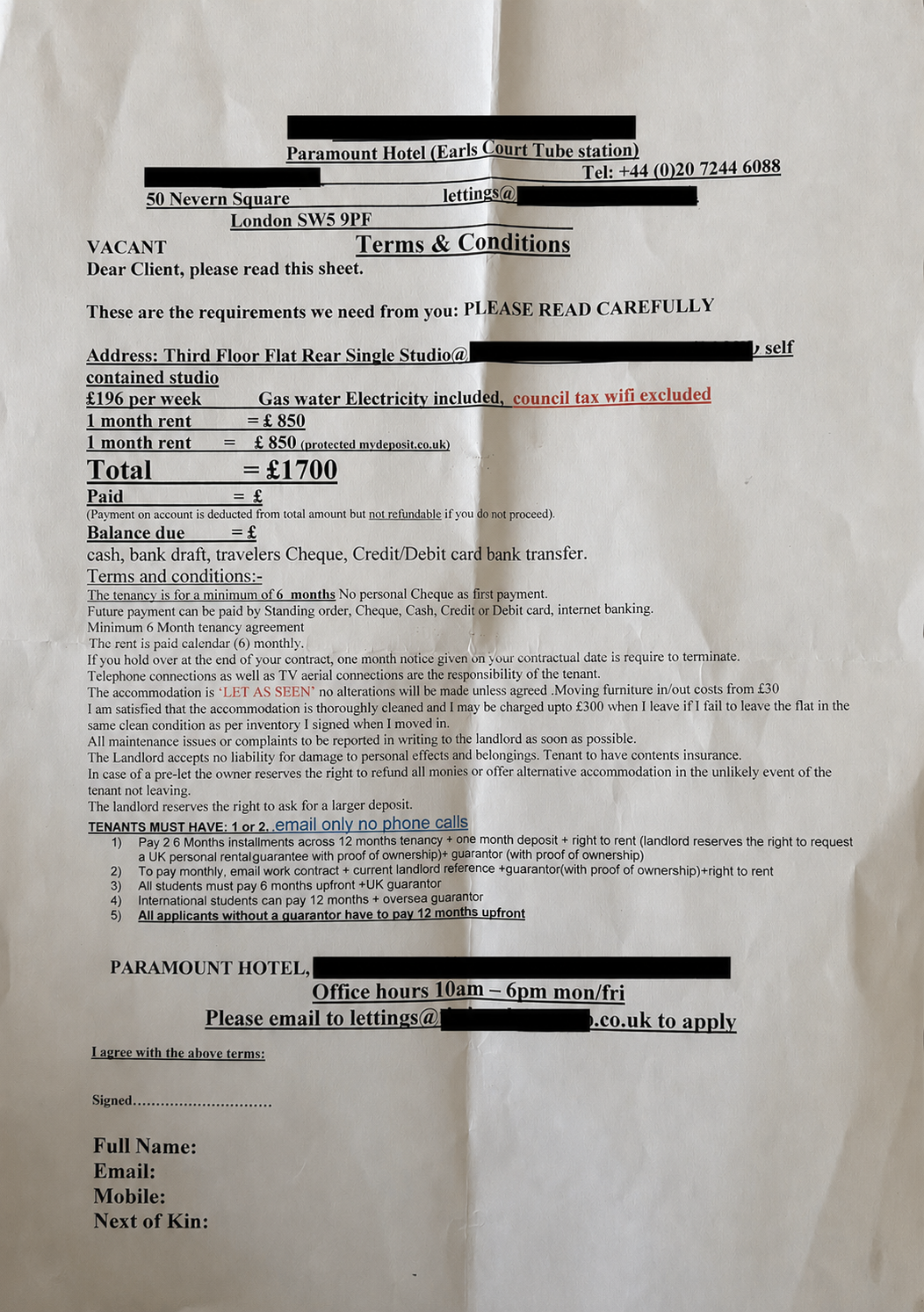
But then…
“Then, as you’re leaving, a so-called pre-contract is pushed into your hand.”
At the end of the viewing, each applicant was handed a pre-contract conditions form.
This was not the tenancy agreement itself, but a document setting out the landlord’s conditions that applicants were expected to accept before moving forward.
Why That Raises Questions
🚩 1. Conditions Before Selection
Applicants were asked to accept terms before referencing, before approval, and before seeing the final agreement.
🚩 2. Pre-Commitment Psychology
Once someone has attended the viewing and wants the room, they are more likely to agree to burdensome conditions.
🚩 3. Screening by Compliance
The sheet can function as a filter:
Who will pay more up front?
Who won’t challenge terms?
Who is desperate enough to proceed quickly?
🚩 4. The Real Contract Comes Later
By the time the formal tenancy arrives, many applicants may already feel committed.
The real contract isn’t signed on paper — it’s signed in pressure.